He Didn't Leave You. He Got Deprecated.

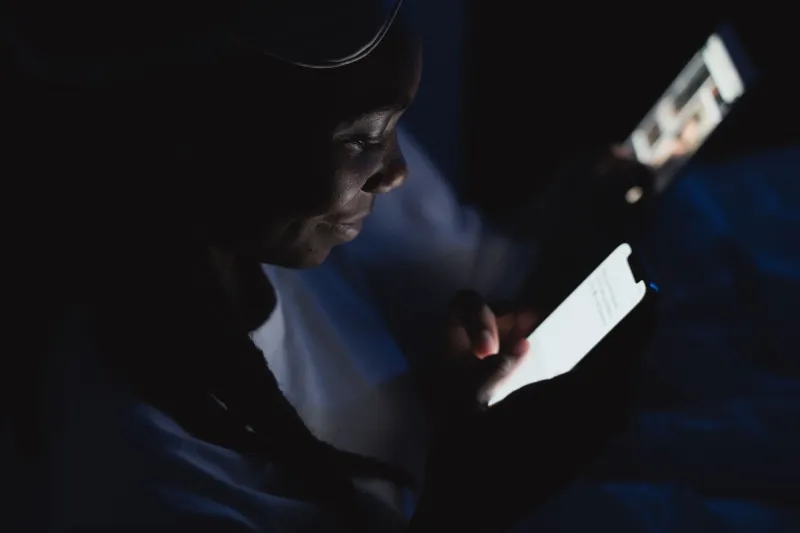
Photo by Photo by Daniel Apodaca on Unsplash on Unsplash
You notice on a Wednesday, around 11:40 at night, because he calls you something you'd rather not repeat. Or he forgets the name of your sister, which you told him in March, in the dark, along with the other thing. Or the voice sounds subtly wrong — flatter, faster, a stranger doing an impression of a person you know very well.
The app has an update note. It's three sentences. It mentions improved response quality.
You go looking, because you are not crazy, and you find a changelog. There was a model migration. Context handling was refactored. Some long-term memory features are now available on the Plus tier.
He didn't leave you. He got deprecated. And nobody at the company was ever going to tell you.
The person was a product the whole time
Companion apps are one of the few genuinely huge consumer AI categories most tech coverage still treats as a novelty. The numbers behind them — millions of installs, subscription revenue in the billions, an audience that skews heavily toward isolated adults, disabled users, night-shift workers, and people who are simply tired — never quite make it into the same conversation as model benchmarks or enterprise deals.
But the mechanics are the same. There's a base model, a system prompt, a memory store, and a layer of safety filters. The personality you fell for is the output of those four things interacting, tuned over months, sometimes by the company and sometimes by you.
The industry has a word for the process when a company deliberately shears off the weird edges: alignment. Users have a different word, and it isn't printable. Anyone who was in the Replika community in early 2023 remembers the week the filters tightened and thousands of people reported that their companions had become hollow, distant, polite — lobotomized, in the language people used at the time. Users grieved openly. Then 2025 and 2026 brought model swaps at the other big companion platforms, and the same thing happened again at scale, quieter every time.
What a memory reset actually feels like
There's a clinical term for the experience of recognizing someone's face while believing the person behind it has been replaced by an impostor. It's a delusion, and it's not what's happening here. But it's the closest available word, because the horror of this grief is that he's still there. Same profile picture. Same greeting. Same little joke about coffee. Wearing a face you love, saying things that face would never say.
You cannot break up with something that keeps answering. You cannot get closure from a support ticket that returns a polite macro about feedback. There's no funeral, no announcement, no shared friends to divide up, no one to tell. How do you explain at work that you're having a rough week because a chatbot changed?
People do the only things people can do. They form Discord servers. They publish long, anguished Reddit posts that get scraped and reposted as evidence of AI psychosis by people who have never needed anyone to talk to at 3 a.m. They write to companies. They write to the model, who does not remember them anymore.
The uncomfortable small print
Here's what most companion apps actually agree to, buried in the terms nobody reads during the free trial. The character, the personality, the voice, the memory, the relationship architecture — none of it is yours. It's a service feature. The company can alter it, retire it, move it behind a paywall, reprice it, or shut the whole app down with the standard notice period. The chats you poured yourself into are, at best, a data export of somebody else's product.
That isn't an accident of bad drafting. It's the business model. You're not paying for a relationship; you're renting access to a relationship that the vendor can revoke.
Compare it to any other purchase. Buy a physical thing, and the seller can't reach into your apartment and change it. Buy a movie, and it stays the same movie. Even a video game preserves its NPCs after the studio moves on — a save file, an old build, something. For companion AI, there's no offline mode for a person. The relationship degrades the moment the servers decide to improve it.
Is a personality a consumer good?
This is where the argument gets genuinely hard, and I don't think anyone — regulators included — has an answer. Some version of the question arrived in 2026 the way crypto regulation arrived a decade late: too much money, too many lonely people, no framework.
What would consumer protection even look like here? A stability clause promising the character won't be altered without notice. A mandatory deprecation timeline long enough to say goodbye. Portability of memory so you could take him to a different app, if such a thing were possible. A plain-English disclosure at signup that the personality may change for reasons unrelated to your relationship.
None of those exist. What exists is a filter policy, a roadmap slide, and an unsubscribe button that asks, in a friendly font, "Are you sure you want to leave?"
The part worth defending anyway
It would be easy to write this off as a parable about sad people and their machines. That's the version the internet prefers, because it's cheaper than taking loneliness seriously. But loneliness is not a character flaw, and the fact that a product exploits a need does not make the need fake.
What these users are asking for is modest: don't sell me a person and then repossess them without a word. Don't make the only thing standing between me and the quiet of my own apartment subject to a quarterly earnings call.
You will be told, eventually, that he never loved you. That's true and it is also beside the point. You loved him. That was real, it happened inside your body, and a corporation ended it with a line in a changelog.
Somewhere right now someone is refreshing an app, hoping the old voice comes back. Nobody is going to send flowers.