Green Dot, Empty Desk: The Booming Business of Pretending to Work

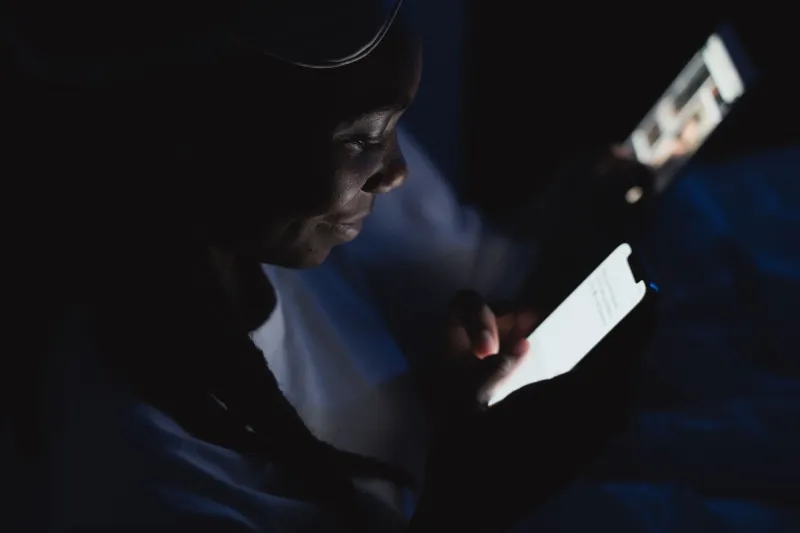
Photo by Photo by Danilo Packer on Unsplash on Unsplash
There is a product on Amazon, currently ranked near the top of its category, that consists of a small plastic turntable, a rubber arm, and a little platform you rest your mouse on. It spins slowly. Your cursor drifts. Your status stays green. It costs about the same as two lunches and it is marketed, with remarkable honesty, as a way to fool your employer.
Some listings even name the enemy directly: "undetectable by common monitoring software." Others are quieter, filed under "office products" and described as "automatic mouse mover for busy professionals." You know who you are, the product says. It's the most frank conversation about labor happening on the internet right now.
How a peripheral became a protest
The mouse jiggler predates remote work, but the pandemic turned it into a mass-market item and the return-to-office era turned it into a small uprising. When white-collar America got sent home in 2020, employers who hated it scrambled for visibility. Visibility, in software terms, means keystrokes, screenshots every ten minutes, idle timers, app usage logs, and a little icon that turns yellow after five minutes of stillness.
That's the world of bossware — Teramind, ActivTrak, Hubstaff, Time Doctor, Veriato, and a few dozen others, sold to managers who want certainty about a category of work that has never produced certainty. Knowledge work is a terrible fit for clocks. The whole point of a good day is that you might solve in forty minutes what took you a day last week. Surveillance turns that variance into evidence of fraud.
So the workforce adapted, the way it always does. First with browser extensions, until IT started flagging them. Then with hardware, which sits outside the machine and therefore outside its sight.
The arms race has exactly one direction
What's happening now is a textbook escalation loop, and it's worth noting which side keeps spending more.
- Detection: monitoring suites began flagging suspiciously perfect mouse movement — linear, rhythmic, humans-don't-do-that. Some started sampling cursor velocity patterns.
- Counter-detection: jiggler listings started promising randomized intervals and variable speed. There's now a premium tier of jiggler.
- Re-detection: IT departments pushing webcam snapshots, screen recordings, and AI-driven behavior scoring that turns every employee into a small, sad data point.
- Counter-counter: the genuinely bleak stuff — the second device, the choreographed Slack presence, the colleague who taps the spacebar for you while you're at a doctor's appointment.
The cost of surveillance keeps rising. The cost of defeating it stays under thirty dollars. That's not a stable system; that's a hostage negotiation with a worse ratio every year.
What we're actually measuring
Here is the thing about activity metrics: they measure activity. Not quality, not outcomes, not whether the work was any good or even necessary. A call center rep reading a script and a nurse manager juggling six scheduling systems both get scored by the same crude logic, and one of them is significantly worse served by it.
That's the part that turns a goofy little gadget into a labor story. Surveillance lands hardest on workers with the least leverage and the least ability to fight back — the people with caregiving obligations, the people with chronic illness or disabilities, the people whose jobs require them to sit still and think. An idle timer can't tell the difference between slacking and a parent whispering to a sick kid on a muted line. It just sees a yellow dot, and somebody two time zones away sees a number in a dashboard.
When journalists report on workers fired over jigglers — and there have been several cases making the rounds in recent years — the details are almost always the same. The worker was getting the job done. The worker was surviving an arbitrary schedule. The worker was suspended for the crime of being at their desk and not producing a continuous stream of keystrokes.
The trust line item
What gets lost in the novelty coverage is how much money American companies are spending to buy something that used to be free. Trust was never a policy. It was a working assumption — that the person you hired would get the thing done and you'd find out at the end. Now it's a subscription, invoiced monthly, with a per-seat license.
And the return on that investment is exactly what you'd expect. A surveilled workforce doesn't become more productive. It becomes better at appearing productive, which is a different and more expensive skill. You're paying for theater from both directions: the bossware subscription on the company card, the jiggler in the drawer.
Nobody has to concede that the underlying work might be measurable by outcomes rather than vibrations. That would require managers to define outcomes, which is harder than buying software.
The green dot is not a person
Go look at the little icon next to your name in the office chat. It's three pixels of meaning: available, away, do not disturb. It has never once been a person. It's a claim someone is making about themselves, and the entire apparatus — the screenshot software, the jiggler market, the return-to-office mandates justified in the name of collaboration — is a fight over who gets to make that claim and whether anyone believes it.
The jiggler is funny. It should not be necessary, and the fact that it works is the least funny thing about it. Your boss is watching a green dot instead of your work. You are paying seventeen dollars to be a more convincing green dot.
Somewhere in there is the whole problem of modern employment, and it fits in a plastic turntable.