Somebody Has to Watch the Darkness So You Can Sleep
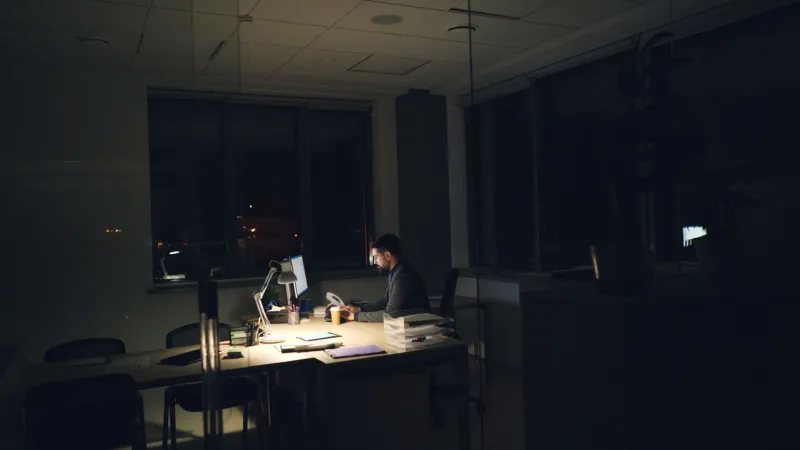
It's 3:17 AM somewhere in a nondescript office park outside of Austin. A woman we'll call Dana — because that's not her real name and her NDA could survive a nuclear event — is on her fourth energy drink and her two-hundredth piece of flagged content for the night. She won't tell us what she saw. She can't. But she will say this: "There are images I will never stop seeing. I don't mean that metaphorically."
Dana is a content moderator. One of tens of thousands of largely invisible workers who form the janitorial backbone of the internet's biggest platforms. Their job is to stand at the drain and catch whatever shouldn't flow through. And the overnight shift — the graveyard shift, in every sense of the word — is where the worst of it tends to pool.
The Job Nobody Talks About (Because They Literally Can't)
Here's the thing about content moderation that most people don't realize: it's not an algorithm's job. Not entirely. Somewhere in the chain, a human being is making the call. A human being is watching the video. Reading the post. Deciding whether what they just witnessed crosses a line — and logging it, tagging it, and moving on to the next one within a matter of seconds.
The platforms love to talk about their AI moderation tools. It sounds cleaner. More scalable. Less like a confession. But the AI flags; humans adjudicate. And those humans are frequently employed not by the platforms themselves but by third-party contractors — a layer of corporate insulation that conveniently distances Silicon Valley from the psychological carnage happening downstream.
Many of these workers sign NDAs before their first day. Comprehensive ones. The kind that don't just prevent you from talking about company strategy — they prevent you from describing the content you've seen. Which means the people most qualified to explain what's actually living on these platforms are legally prohibited from doing so.
"They don't want the public to know what's really out there," said one former moderator — we'll call him Trevor — who worked overnight shifts for a major social platform through a contracting firm for almost two years. "Not because they're evil, necessarily. But because if people knew, they'd have to reckon with it. And reckoning costs money."
Why 3 AM Is Different
Content moderation is brutal at any hour. But the overnight window — roughly midnight to 6 AM in most US time zones — has a specific character that multiple former moderators describe in nearly identical terms: uninhibited.
During daylight hours, there's a social friction that suppresses the worst impulses. People are at work. Kids are at school. There's an ambient accountability that doesn't disappear online, but at least dilutes things. At 3 AM, that friction is gone. The people posting are either in crisis, deliberately evading detection, or operating from time zones where it's the middle of the afternoon and the content pipeline never stops.
"The volume of extreme content spikes overnight," said a former moderator who asked to be identified only as a woman who used to work in Phoenix. "CSAM, self-harm content, graphic violence — it clusters in those hours. I don't know if it's because people think no one's watching, or because that's just when the darkest parts of people come out. Probably both."
CSAM — child sexual abuse material — is the category that comes up most often in conversations with former overnight moderators. It is, without exception, described as the content that does the most lasting psychological damage. And it is disproportionately submitted during overnight hours.
The Invisible Labor Economy
Let's talk about who actually does this work, because the demographics matter.
Content moderation in the US is frequently outsourced — to contracting firms, yes, but also increasingly offshore, to workers in the Philippines, Kenya, and India, where labor costs are lower and American platforms can maintain a comfortable geographic distance from the consequences. When the work does happen domestically, it tends to be concentrated in lower cost-of-living markets, performed by workers who need the job and can't afford to be precious about what it asks of them.
Pay varies wildly, but it is rarely commensurate with the psychological exposure. Reports from workers at major contracting firms have cited wages between $15 and $28 an hour — not nothing, but not hazard pay for the kind of cognitive and emotional hazard involved. Mental health support, when offered at all, is frequently described as performative: a hotline number, a few sessions with a counselor who's never seen what you've seen, a wellness app that sends you breathing exercises.
"They gave us this app," Trevor said. "Like, a mindfulness app. After watching someone die on camera, they wanted me to do a five-minute breathing exercise and get back on the queue."
What It Does to a Person
The clinical term is secondary traumatic stress. It looks a lot like PTSD — hypervigilance, intrusive imagery, emotional numbness, disrupted sleep. The irony of a content moderator with disrupted sleep is not lost on anyone.
Former moderators describe a gradual erosion. It doesn't hit you all at once. It's cumulative. A slow contamination of your baseline. You start dreaming about the queue. You flinch at unexpected sounds. You stop being able to watch movies with any kind of violence because your brain has lost the ability to process it as fiction. You become, without fully realizing it, someone who has absorbed enormous quantities of human suffering on behalf of people who will never know your name.
"I couldn't explain to my family what was wrong with me," said Dana. "Because I couldn't tell them what I'd seen. So I just seemed broken. I was broken. But I couldn't give them the context."
Several former moderators have spoken publicly — in the limited ways their NDAs allow — about struggling with substance use, relationship breakdown, and clinical depression in the years following their time in the role. A 2023 lawsuit against a major platform's contracting firm alleged that workers were systematically denied adequate mental health resources and pressured to return to the queue after traumatic exposures.
Who Really Pays for Your Clean Feed
When you open Instagram or TikTok or X and your feed is — relatively — free of the most horrific content the internet generates, that is not an accident. It is the product of labor. Invisible, underpaid, psychologically devastating labor performed by people who signed their right to talk about it away before they ever sat down at their workstation.
The platforms get to maintain the fiction of a safe, curated experience. The advertisers get to run their campaigns without brand-safety nightmares. You get to scroll without confronting what's actually out there. And the people who made all of that possible get a mindfulness app and a non-disclosure agreement.
There's a version of this story where better regulation, mandatory mental health infrastructure, and enforceable NDA limits change the calculus. Where moderators can speak to what they've witnessed and hold platforms accountable for the conditions they create. That version of the story doesn't exist yet.
For now, the graveyard shift keeps running. Somewhere, right now, someone is watching something you will never have to see.
At least try to remember that the next time you report a post and close the app.