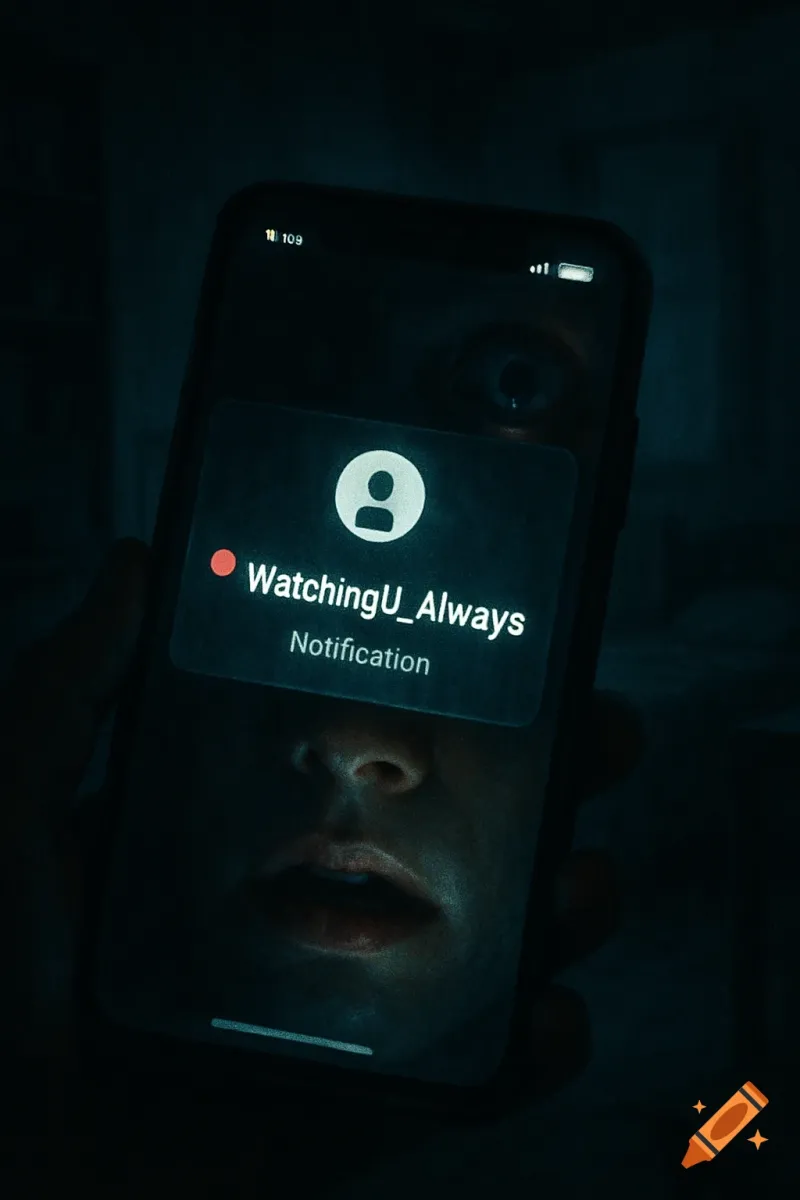
Haunted by Your Own History: How Platforms Keep Serving You Ghosts of Connections You Already Buried

Photo by Photo by Michael Förtsch on Unsplash on Unsplash
Somewhere in your notification history, there's a name you recognize and immediately resent seeing. Not because anything dramatic happened — no falling out, no screaming match in a parking lot — but because you quietly, deliberately moved on. You unfollowed. You muted. You did the modern equivalent of slowly backing out of a room. And yet here it is: Instagram telling you that someone you haven't thought about in half a decade just posted their first Story in a while. As if you asked. As if you care.
You didn't. But the platform does.
The Algorithm Has a Very Different Definition of 'Over'
When you unfollow someone, you probably experience it as a small act of self-determination. A boundary. A quiet statement that says: this no longer serves me. What the platform records is something else entirely — a data point. And data points, unlike feelings, don't expire.
Every like you gave that account in 2018, every comment thread you got pulled into, every time you lingered on their photos for three seconds longer than average — that's all still sitting in a database somewhere, warm and useful. The unfollow doesn't erase any of it. It just adds a new layer on top. Platforms like Instagram, Facebook, and TikTok don't model your social world the way you do. They don't understand closure. They understand engagement patterns, and yours says that at some point, this person made your thumb move. That's enough to keep the door open indefinitely.
The notification that shows up isn't an accident or a bug. It's a calculated bet. Platforms know that reconnection — even uncomfortable reconnection — drives interaction. You might tap through out of curiosity. You might leave a comment. You might spend twenty minutes going down a rabbit hole you didn't intend to fall into. Every one of those outcomes is a win for the platform and a small, quiet loss for you.
Friendship Debt and the Economy of Old Interactions
There's a concept worth naming here: interaction debt. Every time you engaged with someone online, you implicitly signed a contract the platform intends to collect on forever. The more you interacted with someone in the past, the higher that debt, and the more aggressively the system will try to cash it in — even years after you've walked away from the relationship.
This is why Facebook's "People You May Know" feature has always felt faintly accusatory. It's not suggesting friends. It's surfacing receipts. You both attended this event in 2017. You have 14 mutual connections. You viewed their profile six times in 2020. The algorithm doesn't know why you looked. It doesn't know that you were going through something. It just knows you looked, and it's filed that away as evidence of a bond worth nurturing — on its behalf, not yours.
The same logic applies to group notifications. You left that Facebook group three years ago — the one for your old job, or your college dorm, or some hobby phase you've since outgrown. But because you were active in it once, the platform keeps you loosely tethered. Someone posts, and suddenly your phone lights up with activity from a community you deliberately exited. Leaving a group, it turns out, is more of a suggestion than a command.
What 'Mute' Actually Means (Hint: Not What You Think)
Most platforms offer a spectrum of disengagement tools — unfollow, mute, restrict, block — and they market these as user empowerment features. In practice, they're more like a negotiation where you don't actually hold any cards.
Muting someone on Instagram stops their content from appearing in your feed. What it doesn't do is remove you from their notification radar, stop the platform from counting you as part of their audience, or prevent the algorithm from occasionally deciding you should reconnect. Restricting someone limits what they can see, but it's primarily a tool to protect you from them, not to protect you from the platform's own memory of the relationship.
Block is the nuclear option, and even that isn't airtight. Blocked accounts can still be viewed from a logged-out browser. The content still exists. The history still exists. You've removed the person from your experience, but you haven't removed yourself from theirs, or from the platform's understanding of who you used to be.
The Profit Motive Behind Your Discomfort
Let's be honest about what's actually happening here. Platforms are not accidentally sending you these notifications. The product teams at Meta and TikTok and LinkedIn are staffed with some of the sharpest behavioral economists and UX researchers in the country. They A/B test notification copy. They measure open rates. They know, down to a decimal point, how many people who receive a "Your old connection just posted" notification end up re-engaging with the app.
Your discomfort is not a glitch in their system. It is, in a very real sense, a feature. Nostalgia drives clicks. Ambivalence drives clicks. Even mild irritation drives clicks, because irritation means you felt something, and feeling something is just one step away from doing something. The platform doesn't care whether you're happy to hear from your old connection or vaguely annoyed. Either way, you opened the app.
This is the part that should make you genuinely angry: you made a decision about your own social life, and a corporation overrode it because your ambivalence is more monetizable than your clarity.
So What Do You Actually Do About It?
Honestly? Not much, within the system. You can dig into notification settings and turn off specific categories — activity from people you follow, suggested content, reconnection prompts — but these settings are buried, reset themselves after app updates, and often don't cover every pathway through which the platform can reach you.
The more meaningful move is to understand what's happening and stop interpreting these notifications as signals about your own life. When your phone tells you that someone from your past just posted for the first time in months, that's not the universe nudging you toward something. That's a revenue optimization strategy wearing the costume of serendipity.
You unfollowed them for a reason. The algorithm doesn't know what it was. It doesn't need to. It only needs you to forget, just for a second, that you already made your decision.
Don't forget.