Your Apps Are Grieving You: Inside the Increasingly Unhinged World of Abandonment Notifications
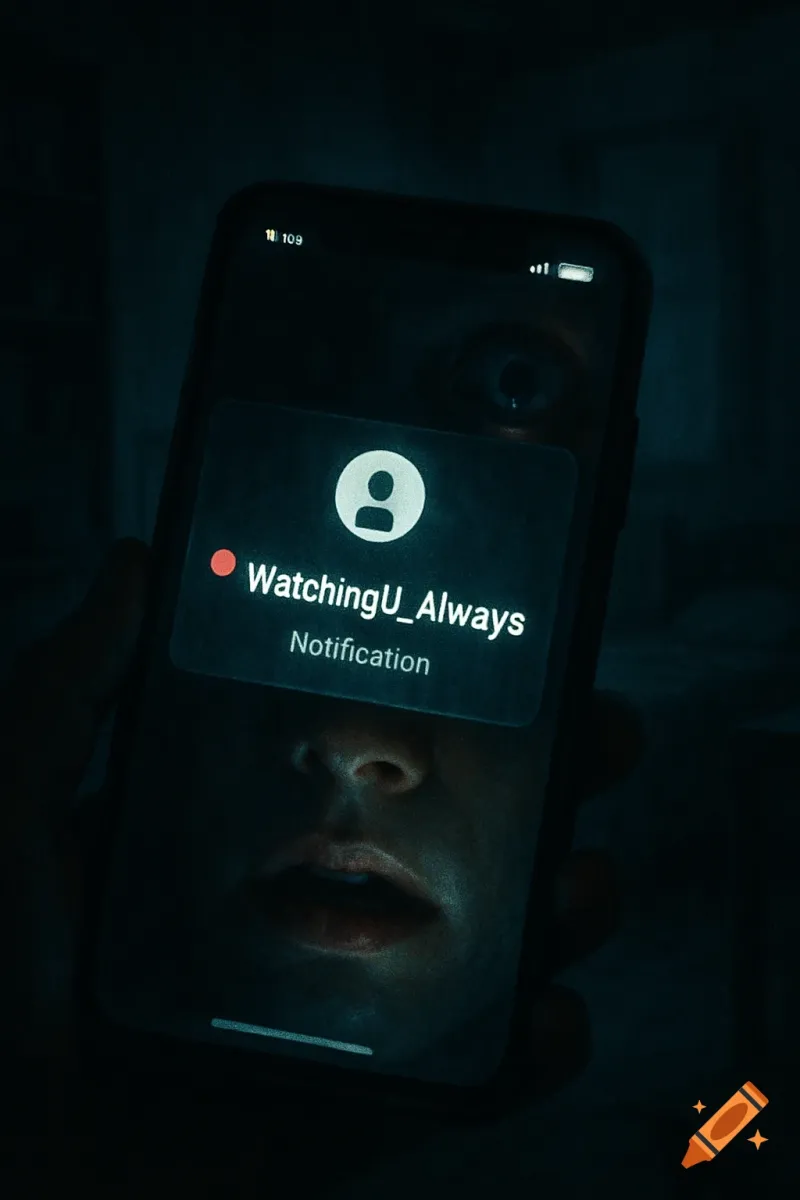
Photo: smartphone screen flooded with notifications dark room glowing alerts, via media.craiyon.com
It started, probably, with something reasonable. A gentle nudge. "You haven't checked in lately!" Maybe a little emoji. Maybe a reminder that you had unread messages or a streak to maintain or some arbitrary virtual reward waiting for you behind the icon you'd stopped tapping.
Then you kept ignoring it. And the app entered its second phase.
The messages got more specific. More personal. They started using your name. They referenced things you'd done inside the app — places you'd been, things you'd bought, habits you'd logged. The tone shifted from cheerful to something harder to name. Needy, maybe. A little wounded. The kind of energy you recognize from a situationship that's starting to understand it's losing.
This is not an accident. None of it is.
The Science of Knowing You've Left
Every app with a competent product team knows, within 24 to 72 hours, that you've stopped using it. This is not surveillance in the dramatic sense — it's just basic engagement tracking. Your session data, your open rates, your push notification response patterns — all of it feeds into what product teams call a "churn model," a predictive system that calculates the probability that you're gone for good versus just temporarily distracted.
Once you cross a certain threshold — say, 7 days of non-engagement for a daily-use app, or 14 days for something more occasional — you get flagged. You move from "active user" to "at-risk user" to, eventually, "lapsed user." Each of those categories has a corresponding playbook. And the playbook gets more aggressive as you move through them.
"The first re-engagement push is usually pretty soft," explains a former product manager who worked on growth at two major consumer apps before leaving the industry. "It's designed to look organic — like the notification you'd get if something genuinely happened. After that, if you haven't re-engaged, the gloves come off a little. The messaging gets more personalized, more emotionally loaded. The goal is to find the specific thing that makes you feel like you're missing out."
A Taxonomy of Desperation
Not all re-engagement tactics are created equal. Here's a rough ranking of how dark they get:
The Fake Social Proof — "Sarah and 12 others posted while you were away." This one is technically true and emotionally manipulative. It's designed to trigger FOMO by implying a social event is happening without you. Bonus darkness points if Sarah is someone you haven't interacted with in two years and the app has specifically surfaced her because its model identified her as someone you find compelling.
The Manufactured Milestone — "You're only 3 days away from your longest streak ever!" Duolingo has made an art form of this. The streak mechanic exists specifically to make leaving feel like destruction rather than just stopping. You're not abandoning an app. You're ending a run. You're letting yourself down. The distinction is subtle and extremely effective.
The Guilt Anchor — This is common in fitness and habit-tracking apps. "You haven't logged a workout in 18 days." No emoji. No encouragement. Just a number, sitting there, doing its work. The implication is that the app knows something about you that you'd rather not confront. It's not wrong, which is what makes it effective and a little cruel.
The Fake Personalization — "We found something we think you'll love." The recommendation is algorithmically generated from your old behavior and almost certainly not something you'll actually love. But it sounds like someone thought of you. It sounds like the app has been waiting, hoping, curating things on your behalf. It hasn't. It's a query.
The Countdown Urgency — "Your free trial expires in 24 hours." Or: "Your saved items are about to be removed." Or: "Your account will be deactivated after 30 days of inactivity." Some of these are real. Many are not. The ones that aren't are lying to you. That's the definition of a dark pattern.
The People Who Designed This
The uncomfortable truth about notification dark patterns is that they weren't designed by villains. They were designed by smart, often well-intentioned people working inside systems that measure success in daily active users and monthly retention rates.
"The metrics rewarded re-engagement," says another former product manager, this one from a social platform you definitely still have on your phone. "If a push notification got someone to open the app, that was a win in the dashboard. Nobody in the meeting was asking whether it was honest. Nobody was asking whether the user actually wanted to come back or just felt guilted into it. We were measuring opens, not satisfaction."
This is how you get an industry where the people building the products are often personally uncomfortable with the tactics being deployed, but the incentive structures make dissent difficult. You can raise concerns in a product review. You can flag something as "aggressive." But if the aggressive version tests better — and it usually does, short-term — it ships.
Behavioral psychology research, particularly work on variable reward schedules and loss aversion, has been absorbed wholesale into app design. The same principles that make slot machines work — the anticipation, the near-miss, the sunk cost — are baked into notification timing, messaging, and the streak mechanics that make leaving feel like losing something you earned.
The Notification Graveyard
There's a specific phone state that most of us know but rarely name: the graveyard. It's the folder, the back page of your home screen, the notification tray you've stopped clearing. It's full of apps that used to mean something — the fitness tracker from your January motivation spike, the language app from when you were going to learn Portuguese, the social platform you joined because everyone else did and left because they did too.
Those apps are still trying. They're still sending messages into the void. They've been downgraded to "allowed" notifications, or maybe you turned them off entirely, but somewhere in a data center their models have classified you as churned and filed away the things they learned about you for the next time you come back.
Because the other thing the churn model knows is that lapsed users often return. Not because the guilt trip worked, but because life circumstances change, social graphs shift, and sometimes the thing you abandoned is actually useful. The apps are playing a long game.
Which means the notification graveyard isn't really a graveyard. It's a waiting room. And the apps in it are very, very patient.