The App Shows You the Carrot. It Hides the Treadmill.
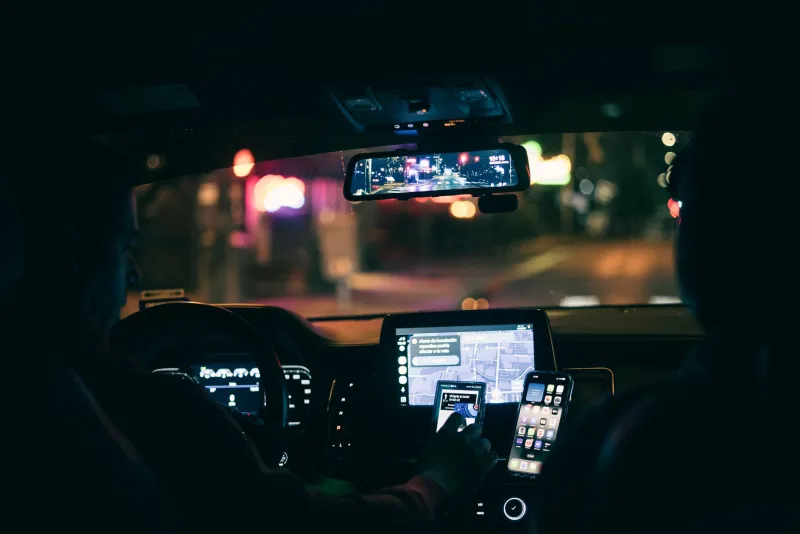
There's a version of the gig economy pitch that sounds almost reasonable. Be your own boss. Set your own hours. Earn money whenever you need it. It's plastered across subway ads, YouTube pre-rolls, and the desperate 3 AM corner of every personal finance forum. And for a lot of people — especially those squeezed out of traditional employment, juggling caregiving, or just trying to cover a bad month — the pitch lands hard enough to try.
Then you actually start driving. And the app never quite shows you the full picture.
This isn't an accident.
The Interface Is a Magic Trick
Open DoorDash, Uber Eats, or Instacart as a driver and the first thing you see is designed to feel like opportunity. There are orders nearby. There's a bonus zone lighting up your map in a warm, urgent orange. You made $34 this morning, the app cheerfully reports. A little badge tells you you're 60% of the way to a weekly incentive.
What the interface does not show you, by default, is your mileage. Your gas costs. The wear on your brakes and tires. The depreciation quietly eating your car's resale value with every delivery. The self-employment tax that's going to ambush you in April. The time you spent waiting in a parking lot for an order that never materialized, which the app does not count as "working" but your body absolutely does.
Marcus, a former DoorDash driver in the Atlanta metro area who ran his own numbers for eight months before quitting, described it plainly: "The app told me I made about $900 in a week I worked really hard. When I put everything into a spreadsheet — gas, miles, the IRS mileage deduction I was missing, the extra insurance I needed — I was looking at something closer to $11 an hour. And that's before taxes."
Eleven dollars an hour. In a week he described as "working really hard."
Surge Pricing Theater
One of the most psychologically effective tools in the gig platform arsenal is surge pricing — the red-hot zones on the map that promise elevated pay during high-demand periods. On the surface, it's a simple supply-and-demand mechanism. In practice, it functions more like a slot machine lever.
Drivers and delivery workers describe chasing surges as one of the most seductive and consistently disappointing experiences the apps manufacture. You see the bonus zone. You drive toward it. By the time you arrive, the surge has collapsed — either because other drivers had the same idea, or because the algorithm decided demand had normalized. You're now in an unfamiliar part of town, having burned gas to chase a number that evaporated.
Jasmine, who spent two years driving for both Uber and Lyft in the Chicago area, says she eventually started timing how often the surge actually held by the time she reached it. "Maybe one in four times, honestly. The rest of the time I was just... repositioning for free. The app made it feel like I was making a smart move. I was just doing what it wanted me to do."
This is not a bug. Platform researchers and labor economists have written extensively about how surge mechanisms are calibrated not just to balance supply and demand, but to keep driver attention locked to the app. A surge that reliably paid out every time would be less effective at sustaining engagement than one that pays out sometimes. Anyone who's ever fed a quarter into a slot machine already understands the underlying logic.
The Bonus That's Always Just Out of Reach
If surge pricing is the carrot on a stick, the weekly bonus structure is the stick itself.
Most major gig platforms use some version of a tiered incentive system: complete X deliveries this week and earn a bonus of Y dollars. The numbers are calibrated with uncomfortable precision. The bonus threshold is almost always set just high enough that hitting it requires stretching your hours significantly — but not so high that it feels impossible. You end up working more than you planned, in service of a bonus that, when divided across those extra hours, rarely represents meaningful additional income.
"I hit the bonus three weeks in a row at one point," Marcus said. "I was proud of myself. Then I looked at how many extra hours I'd put in to hit it each time. The bonus was basically paying me to work more for less."
The interface never frames it that way, of course. It frames it as a goal you're crushing, a milestone you're approaching, a reward you've almost earned. The language of achievement and progress is everywhere. The language of labor cost is nowhere.
When Workers Do the Math the App Won't
What's remarkable — and kind of quietly heroic — is how many gig workers have started building their own tracking systems in response. Subreddits like r/doordash_drivers and r/UberDrivers are full of homemade spreadsheets, expense tracking templates, and workers comparing notes on what they actually net after everything is accounted for.
The IRS standard mileage deduction (67 cents per mile in 2024) is one of the most commonly overlooked factors. At typical gig delivery mileage, that deduction — which represents a real cost even if you don't itemize — can swing your effective hourly rate by several dollars. Most platforms don't surface this information unprompted.
Some workers have turned to third-party apps like Stride or Everlance to track expenses the gig platforms deliberately leave off-screen. Others have gone analog, keeping notebooks in their cars. The fact that so many workers feel the need to build parallel accounting systems just to understand what they're actually earning is, in itself, a pretty damning indictment of how the platforms are designed.
The Design Is the Policy
It would be tempting to frame all of this as a series of oversights — as if DoorDash and Uber simply forgot to include a real-time profitability calculator in their driver interfaces. But these are companies with enormous engineering resources and obsessive attention to behavioral data. They know exactly what information keeps drivers on the road longer. They know exactly what information might cause drivers to log off.
The interface is the policy. The omissions are intentional. The gamification is a retention strategy dressed up as generosity.
None of this means gig work is worthless to everyone who does it. For some people, in some circumstances, the flexibility genuinely matters more than the hourly math. That's a real trade-off that real people make with open eyes.
But those people deserve to make that trade-off with accurate information. Right now, the apps are handing them a map with half the roads missing and calling it freedom.
The treadmill keeps moving. The carrot stays just far enough ahead. And somewhere in a server farm, an algorithm is very pleased with how the numbers are trending.