Your Forgotten Subscriptions Have Grown Up and They Want to Talk
Open your bank statement. Not the one you glanced at last Tuesday while half-watching something on Netflix — really open it. Scroll down past the coffee shops and the grocery runs and the one embarrassing fast food charge you're pretending didn't happen. Go further. Keep going.
There they are.
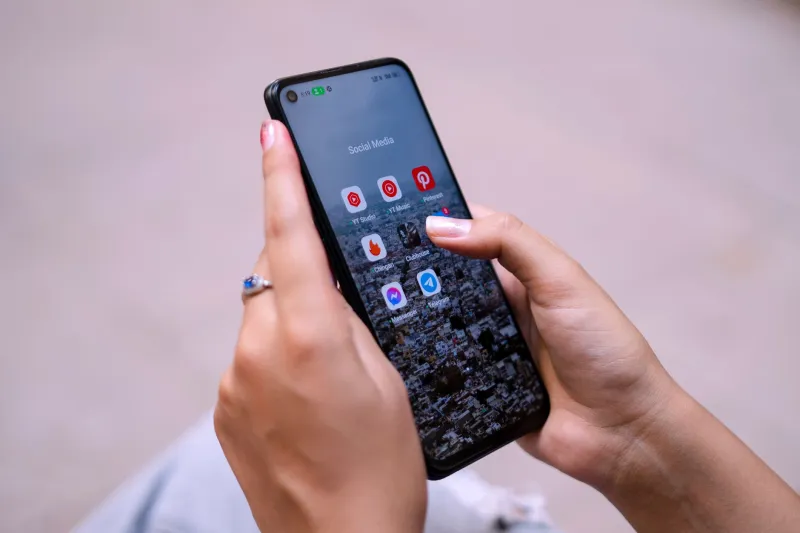
Six, maybe eight, maybe twelve line items that shouldn't exist. Recurring charges so small they've learned to camouflage themselves between the legitimate expenses. Four ninety-nine here. Twelve ninety-nine there. A lonely $2.99 that you genuinely cannot place no matter how hard you squint at it. These are your forgotten subscriptions, and they have been alive this entire time — growing, aging, quietly accumulating a personality — while you were out there pretending to be a person who has their finances under control.
The Museum of Who You Were Going to Be
Every forgotten subscription is a timestamp. A receipt from a specific moment when you believed, sincerely and completely, that this particular product was going to be the thing that finally fixed you.
There's the fitness app you downloaded in January 2022, the one with the cheerful interface and the celebrity trainer who called you "champ" in push notifications. You used it for eleven days. You have now paid for it thirty-seven times. Somewhere in its servers, your initial fitness assessment still exists — your weight, your goals, your breathless optimism — preserved in digital amber like a bug that thought it was going somewhere.
There's the meditation service. You know the one. Every tech-adjacent person in America downloaded a meditation app at some point between 2019 and 2022, usually during a crisis, always with the best intentions. Yours is still running. It has sent you 847 gentle reminders to breathe. You have ignored all of them. You are paying $12.99 a month for a mindfulness service to watch you be completely un-mindful about the existence of the mindfulness service.
There's the cloud storage tier you upgraded to during a move, because you were going to digitize everything, organize your whole life, build a real system. The storage is mostly holding 4,000 photos from 2019, a folder called "IMPORTANT DOCS — SORT LATER" that you have never opened, and approximately 300 pictures of your ex's dog. The dog's name was Biscuit. Biscuit is doing fine, probably. You are paying $3.99 a month to store proof that Biscuit existed.
Autopay Is the Real Villain Here
None of this would be possible without autopay, which is one of the most psychologically sophisticated inventions of the digital age and nobody talks about it enough.
Autopay removes the decision. That's its entire pitch, and it's a good pitch — nobody wants to manually pay for things every month. But what autopay also removes is the moment of reckoning. The pause where you would naturally ask yourself: wait, am I still using this? Instead, the money just leaves. Quietly. Automatically. With the bureaucratic efficiency of a system that has no interest in whether you're getting value from anything.
The subscription economy was built on this. Not on the assumption that you'll use the product forever — on the assumption that you'll forget you're paying for it until the math becomes uncomfortable enough to address. And by the time it gets uncomfortable, you've spent $156 on a journaling app that contains exactly one entry from March 2022 that just says "trying this out."
Why Canceling Feels Like Losing an Argument
Here's the part nobody wants to admit: canceling is hard, and not just because cancellation flows are deliberately designed to be a nightmare (though they are, and that's a whole separate crime).
Canceling is hard because canceling is a confession.
When you finally go through the process of killing a subscription — navigating the three confirmation screens, declining the guilt-trip discount offer, clicking the final button that says something passive-aggressive like "Yes, I want to lose access" — you are formally acknowledging that the version of you who signed up was wrong. That the person who was going to meditate every morning and digitize their files and work out with a celebrity trainer named something like Jax did not materialize. That you are, in fact, still you.
This is why people keep subscriptions they haven't used in two years. It's not laziness, exactly. It's more like... superstition. As long as you're still paying for the gym app, you're still technically the kind of person who might use the gym app. The moment you cancel, that door closes. You're no longer someone who meditates. You're someone who used to try to meditate and gave up.
The subscription isn't just a recurring charge. It's a recurring vote of confidence in a future self who keeps not showing up.
The Audit Nobody Wants to Do
Financial advisors will tell you to do a subscription audit. Go through everything, cancel what you don't use, redirect that money toward something meaningful. This is correct advice. It is also, psychologically speaking, the equivalent of being told to clean out a storage unit full of your own abandoned dreams on a Saturday afternoon.
Because you will find things. The language learning app from when you were going to become conversational in Spanish before that trip you also didn't take. The premium news subscription from when you were going to be more informed. The creative writing platform from the year you were definitely going to finish something.
Each cancellation is a small funeral. You are laying to rest a version of yourself that deserved better than to die in a bank statement.
Or Maybe Just Let Them Run
There's a darker option, of course, which is to do nothing. To close the bank statement, make peace with the vague awareness that some money is going somewhere, and decide that the psychological cost of confronting all of it is simply not worth the $47 a month you'd recover.
A lot of people choose this. It's not entirely irrational. Ignorance has a price, but so does excavating your own history of failed self-improvement projects on a Wednesday night.
What's wild is that the apps don't care either way. They're not waiting for you to come back. They're not hurt by your absence. They're just running — server costs covered, renewal processed, your abandoned profile sitting there like a note you left for yourself and forgot to read.
Biscuit's photos are still uploading. The meditation app still wants you to breathe. The fitness tracker still thinks you're a champ.
And somewhere in your bank account, a $9.99 charge just quietly renewed for the twenty-eighth time, carrying with it the ghost of whoever you were trying to become when you first entered your credit card number and clicked "Start Free Trial."
You should probably cancel it.
You probably won't.
Welcome to Digital Hell.