The $15,000 Drain: Inside the Subscription Trap Designed to Outlive Your Memory
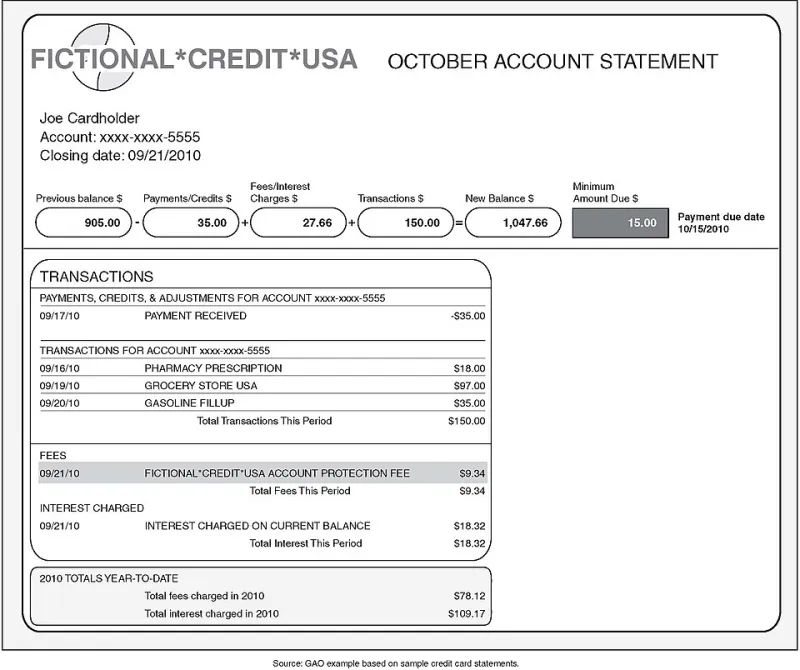
Photo: U.S. Government Accountability Office from Washington, DC, United States, Public domain, via Wikimedia Commons
Kayla didn't go looking for the charge. She was reconciling her bank account after a tax season panic when she found it — $179.99, annual, from a software company whose name she didn't immediately recognize. When she looked it up, she found it was a PDF editor she had downloaded during a work-from-home scramble in 2020. She had used it twice. She had been paying for it every year since.
"I did the math," she said. "Four years. Over seven hundred dollars. For a PDF editor I used twice."
Kayla is not unusual. She is, in fact, extremely normal. And the system that got her is not a bug. It is the product.
The Forgetting Is the Feature
Subscription businesses live and die by a metric called involuntary churn — customers who cancel because they actively want to leave. What they love, and what they engineer for, is the opposite: customers who stay because they forgot to leave, or because leaving was made just difficult enough that they gave up.
This isn't a cynical read on an industry that started out pure. It's the stated logic of subscription business models, discussed openly in SaaS conferences and growth marketing blogs. The ideal subscriber is one who signed up during a moment of genuine need and then never thought about it again. The charge becomes background noise. Background noise is revenue.
The design vocabulary for achieving this has a name: dark patterns. And the subscription industry has developed them into a high art.
A Brief Tour of the Dark Pattern Museum
The free trial that requires a credit card is the gateway drug. The logic offered to you — "so we can process your payment if you decide to continue" — is technically accurate and functionally manipulative. The real purpose is to ensure that inertia works in the company's favor. Canceling requires an action. Doing nothing results in a charge. Most people do nothing.
Then there's the cancellation flow designed as an obstacle course. You go to cancel, and you're routed through a sequence of screens — are you sure, what if we offered you a discount, what if we paused instead of canceled, have you considered that you might need this later — that is specifically engineered to exhaust your resolve. Researchers have documented cancellation flows with as many as eight screens between the initial intent and the final confirmation. Some never show you a confirmation at all, and the charge appears again next month.
Annual billing, offered at a discount, is particularly elegant in its cruelty. You pay once, forget about it for eleven months, and then get surprised by a charge that's large enough to sting but not large enough to feel like an emergency. By the time it hits, you've lost the psychological connection to the original decision to subscribe.
And then there are the apps that bury the cancel button. Not metaphorically — literally buried. In some cases, cancellation is only possible through a specific sequence of menu items that doesn't appear in any intuitive navigation path, or through a customer service chat that's only available during business hours in a time zone you don't live in.
The Lifetime Math Is Ugly
The Consumer Financial Protection Bureau has estimated that the average American household carries somewhere between $200 and $300 in monthly subscription charges when you include streaming, software, fitness apps, news, cloud storage, and the various other recurring services that have colonized everyday life.
Let's be conservative and call it $200 a month. That's $2,400 a year. Over the course of a 40-year adult working life, that's $96,000 in subscription spending — and a significant portion of that, by every available measure, is going toward services people either forgot about or stopped using years ago.
The $15,000 figure in the headline is actually a conservative estimate of what the average person loses to forgotten and unused subscriptions over a lifetime. Some researchers put the number higher. The subscription economy has grown by over 400% in the last decade. The forgetting has scaled accordingly.
Horror Stories From the Statement
Marcus found a gym membership he'd been paying for since 2018. He moved cities in 2019. The gym was in Ohio. He now lives in Portland. Five years of charges. Nearly $900.
Denise discovered that a meal kit service she'd paused — not canceled, paused — had unpaused itself after 90 days per a clause in the terms of service. She'd been charged for boxes that were delivered to her old address for eight months.
Jordan found three separate cloud storage subscriptions, all acquired during different moments of digital panic, all storing essentially the same files. Combined annual cost: $340. He needed maybe 40 gigabytes of storage. He had several terabytes across three platforms.
These are not people who are bad with money. They are people who were successfully targeted by systems specifically designed to exploit the limits of human attention.
The Audit, Because You Need to Do It
The bad news is that auditing your subscriptions is annoying. The good news is that it pays better than almost anything else you'll do this weekend.
Start with your bank and credit card statements — every single one, going back at least 13 months to catch annual billing cycles. Search for recurring charges. Flag anything you don't immediately recognize. Then go to your email and search for terms like "subscription," "renewal," "billing," and "receipt." You will find things. Possibly alarming things.
Services like Rocket Money, Trim, and Privacy.com's card controls can help automate the detection process. Virtual single-use card numbers are particularly useful for free trials — when the trial ends and they try to charge the card, it simply fails, and you're never enrolled.
For the cancellations themselves: Apple and Google both have subscription management pages in their app store settings that list every active subscription tied to your account. These are genuinely useful and most people don't know they exist. Check them.
For the obstinate ones — the services that make cancellation a bureaucratic nightmare — the nuclear option is a credit card chargeback, though this should be reserved for cases where you've made a genuine attempt to cancel and been stonewalled. Some people have success disputing recurring charges directly with their bank as unauthorized after a failed cancellation attempt.
The Industry Isn't Going to Fix This
The FTC has made noise about requiring easier cancellation processes — the so-called "click to cancel" rule that would mandate that canceling be as simple as subscribing. It's been in regulatory limbo. The subscription industry has lobbied against it with considerable enthusiasm.
Until something changes structurally, the burden is on you. That's genuinely unfair. It's also true.
The system was built to drain you slowly enough that you never notice until you do the math. Do the math. You're going to need to sit down first.